

A shallow pan smoker meal
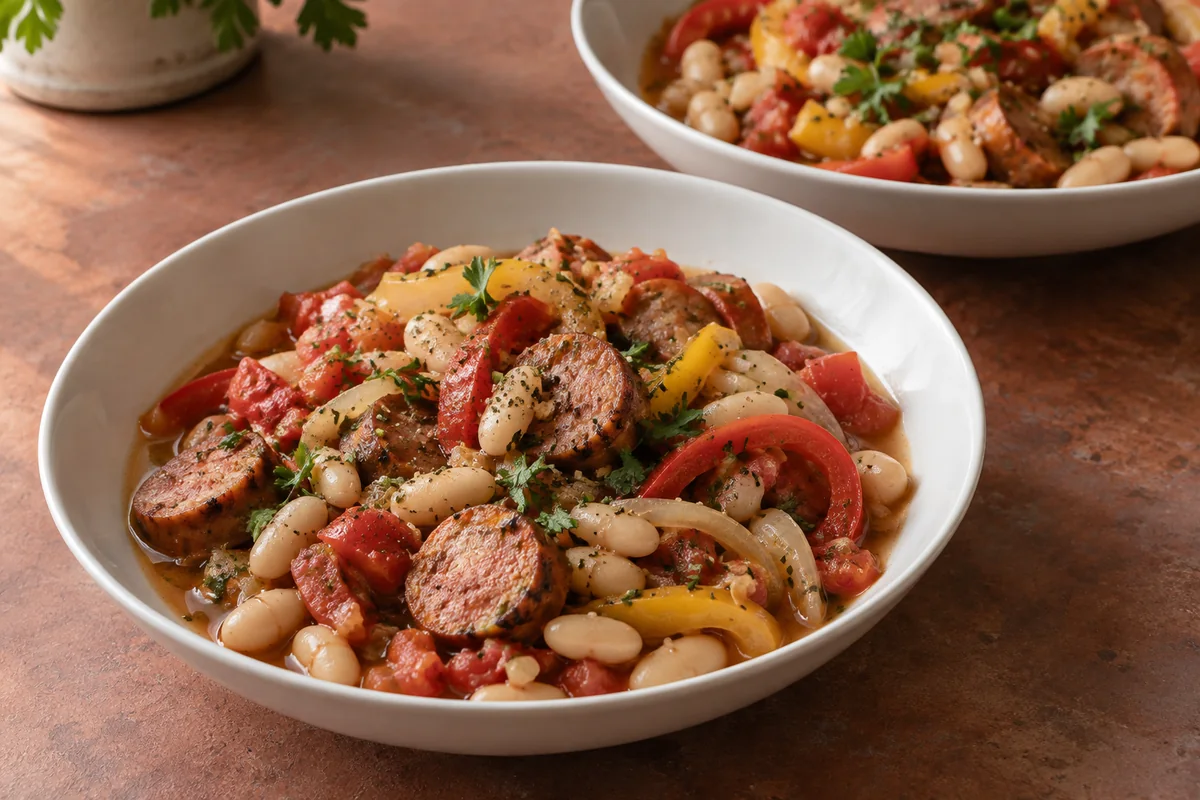
Smoked Sausage, Pepper and White Bean Bowls
Fully cooked sausage seasons a shallow pan of peppers, tomatoes and white beans. A little stock keeps the beans moist while the vegetables soften in the smoker.
- Makes
- 2 complete dinner bowls
- Preparation
- About 15 minutes
- Cooking or chilling
- About 35 to 50 minutes
Get everything ready
Ingredients
2 complete dinner bowls
Shopping list and store linksCopy your list to use at any store
Copy the ingredient list to use while you shop.
This list is for one recipe batch. For several batches or a whole menu, use the meal planner to check your total amounts.
Show list to select by hand
Optional store shortcuts Each opens in a new tab
Your list is not sent to the store. Choose items and quantities on the store website.
These links do not fill a cart. Check local availability, pack sizes and delivery fees at your store.
These grocery store links do not earn us a commission.
What you need
Smoker, chamber thermometer, 8 by 8 inch metal pan about 2 inches deep, stirring spoon and food thermometer. Check that the pan is rated for your smoker.
Time to cook
Method
Check the sausage label
Choose sausage clearly labeled fully cooked and follow any stricter package heating directions. Raw sausage is not a direct substitute. Heat the smoker to 300°F and check the cooking area.
Fill a shallow pan
Combine sausage, beans, pepper, onion, tomatoes, stock, oil, oregano and pepper in the recommended 8 by 8 inch pan. Spread evenly, keeping the food no deeper than about 1½ inches and at least ½ inch below the rim. If the vegetables fill the pan higher, divide the food between two pans. Use another similar pan for each extra batch.
Cook and stir
Cook uncovered about 35 to 50 minutes, stirring after 20 minutes. The vegetables should soften and the liquid should bubble around the beans. If the pan looks dry before the vegetables soften, add water 1 tablespoon at a time.
Check throughout
Probe several places in the mixture and sausage for at least 165°F, or a higher endpoint if the package requires it. Divide into two bowls and scatter with parsley.
Before you make it
Use the right product
Fresh uncooked sausage needs a different method and temperature checks suited to its meat type. This formula starts with fully cooked sausage.
Let the beans do their job
The sausage is one component of the meal. The full can of beans and vegetables completes the two portions.
Temperature comes first
Use cooked ingredients that were promptly refrigerated. Reheat leftovers to 165°F. Making another dish does not restart their storage time. See the USDA food safety guidance.
Cooking times and serving counts are estimates. The planner rounds up to complete batches. When you multiply a batch, use additional pans or cook in stages rather than crowding the food.
Choose the setup
Compare smoker suitable pans and temperature checks.
Serving and leftovers
Keep cold food at 40°F or below and hot food at 140°F or above. Refrigerate perishable food within 2 hours, or within 1 hour when the temperature is above 90°F. Reheat leftovers to 165°F. Use a food thermometer for meat rather than relying on color.
Cool leftovers promptly in shallow containers. Use or freeze refrigerated leftovers within 3 to 4 days. When a new dish uses previously cooked food, count from the oldest cooked component rather than starting the clock again.
USDA food handling guidance covers cooking temperatures, holding food, and refrigeration.
See USDA leftovers guidance for cooling, storage and reheating.