


Start with the animal
Ask before you buy
A good question can be more useful than knowing every cut by name. Open the one that fits your meal.
How are you cooking it?
Say whether you are grilling steaks, smoking a roast, or cooking meat until it pulls apart. Ask for another cut suited to that same method if your first choice is unavailable.
What is included in the weight?
Confirm whether the cut has a bone, skin, or a substantial fat cap. Ask what trimming is already done and what you will need to do at home.
How should it be portioned?
For steaks and chops, specify thickness as well as count. For roasts, discuss the total weight and whether you want one piece or several. Mention the other mains and sides you are serving.
What does this name mean here?
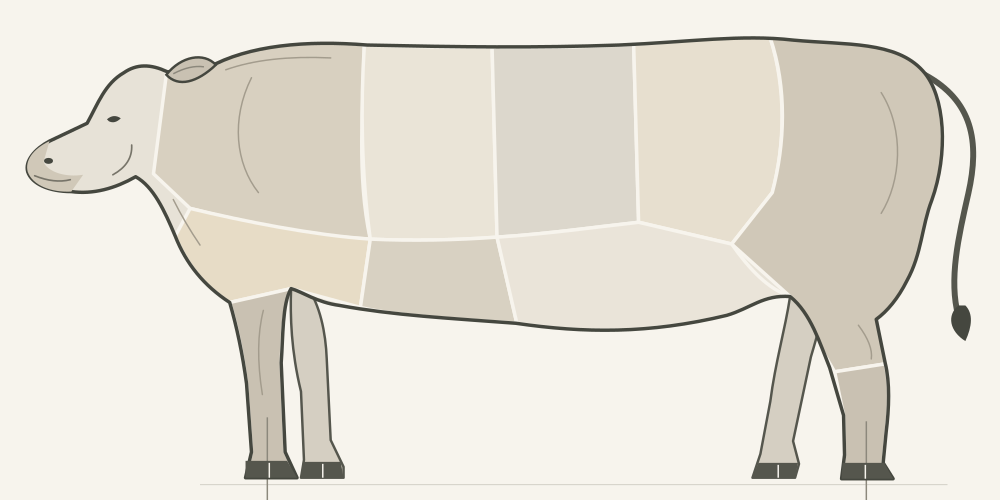
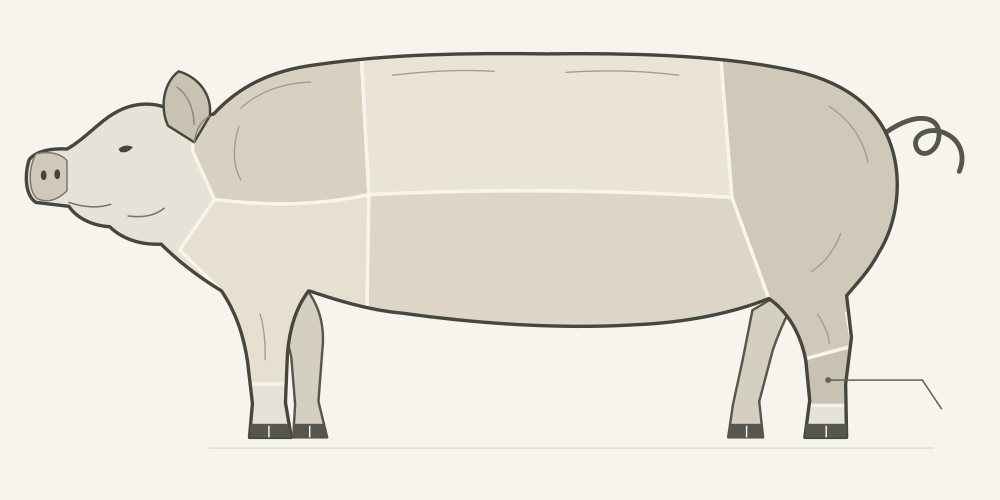
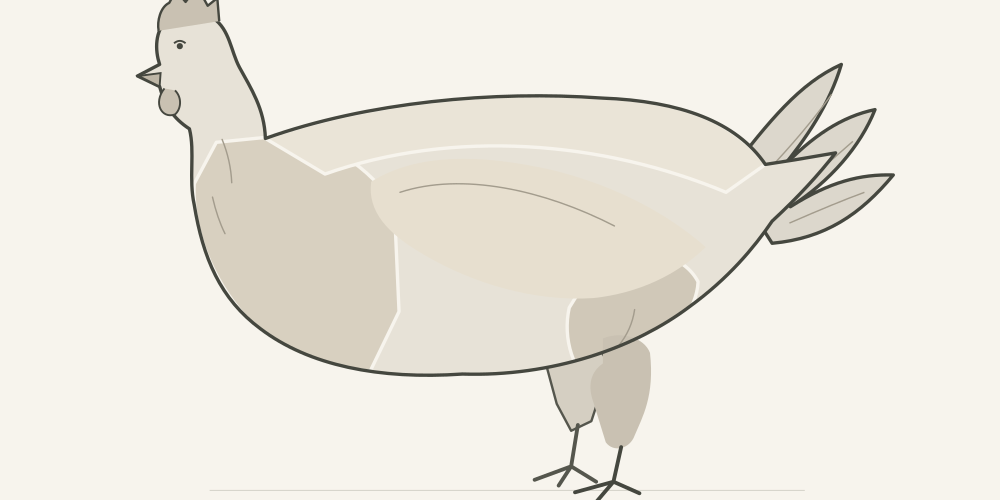
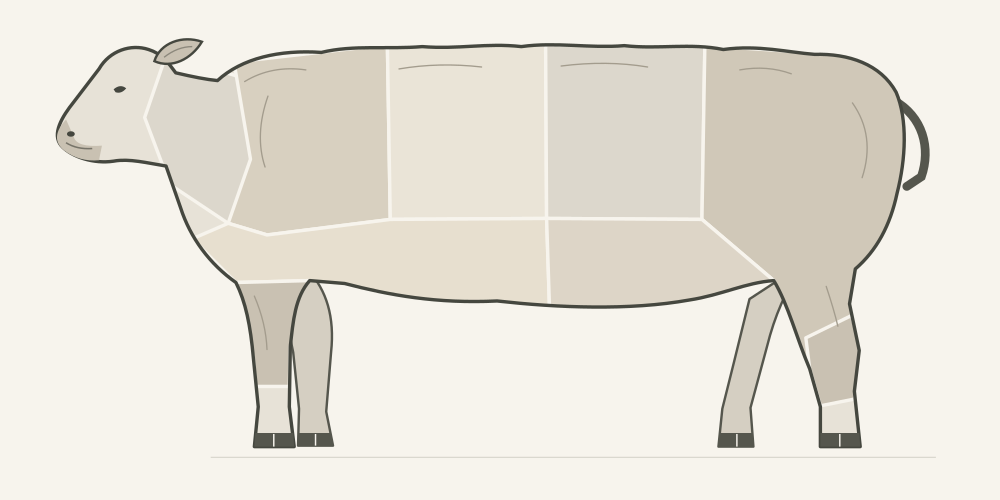
Ask which part of the animal the cut comes from. Names and trimming conventions vary between stores, so match the actual cut to your recipe.
Cut sheets can specify steak thickness, roast size and pieces per package. Kansas State's consumer beef guide gives examples.
From the counter to dinner
The cut is picked. Make the list.
Plan around your guests, appetite and other dishes. Check that the bone and trimming assumptions match what you are buying.
Behind the guides
These guides use familiar US cut names and references from the Beef Checkoff, Pork Checkoff, American Lamb Board, USDA, and university extension services. Each animal page links to the sources for its cut descriptions. The diagrams simplify anatomy and show broad regions rather than exact cutting boundaries.