

From the smoker
Smoked Pork Belly Bites
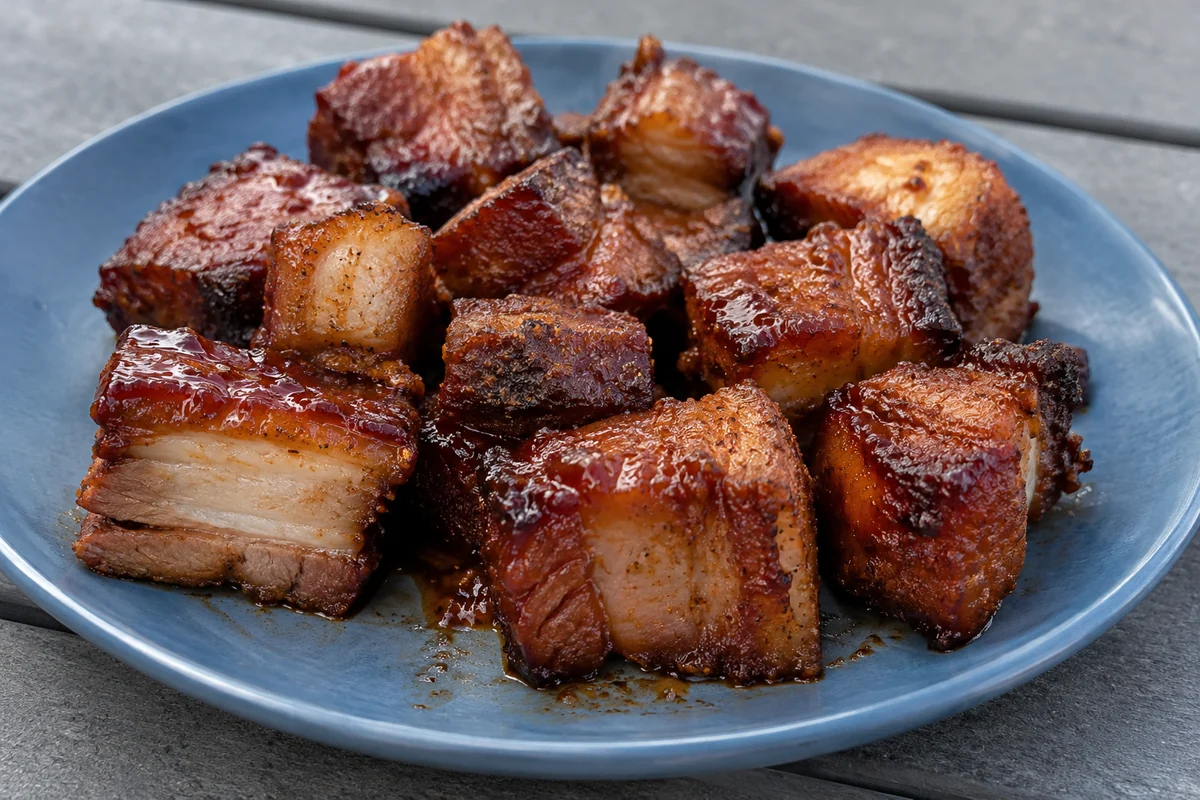
These pork belly cubes start uncovered so the seasoning forms a crust. A covered pan softens them, then BBQ sauce, honey, and a little cider vinegar make a sticky glaze. Serve small portions because the belly is rich.
Cookout Compass cooking score 4.5 out of 5

- Makes
- About 8 appetizer servings or 6 main servings
- Preparation
- About 20 minutes
- Cooking
- About 4 to 5 hours, plus a short rest
Get everything ready
Ingredients
About 8 appetizer servings or 6 main servings
Shopping list and store linksCopy your list to use at any store
Copy the ingredient list to use while you shop.
This list is for one recipe batch. For several batches or a whole menu, use the meal planner to check your total amounts.
Show list to select by hand
Optional store shortcuts Each opens in a new tab
Your list is not sent to the store. Choose items and quantities on the store website.
These links do not fill a cart. Check local availability, pack sizes and delivery fees at your store.
These grocery store links do not earn us a commission.
What you need
Smoker, smoker safe wire rack and pan, food thermometer, smoker thermometer, heavy foil, clean tongs.
Time to cook
Method
Cut and season
Heat the smoker to 275°F and check its chamber temperature. Cut the skinless belly into cubes about 1½ inches across. Keep them a similar size so they finish together. Mix the sugar, paprika, salt, pepper, and garlic powder, then coat the cubes evenly.
Build the crust
Arrange the cubes on a smoker safe rack over a drip pan, leaving space between them. Smoke uncovered for about 2 to 3 hours, until the outside has a dark seasoned crust. Use the thermometer in the meaty part of several cubes rather than in a layer of fat.
Cover until tender
Transfer the cubes to a deep smoker safe pan, add the apple juice, and cover tightly with foil. Cook for about 45 to 90 minutes more. Begin checking texture around 195°F. A probe should move through the meat with little resistance. Keep cooking if the fat still feels firm or rubbery.
Drain and glaze
Uncover carefully and drain excess rendered fat and liquid into a heatproof container. Mix the BBQ sauce, honey, and vinegar in a clean bowl. Gently toss the hot cubes with the glaze, then spread them in a single layer in the pan.
Set the glaze
Return the uncovered pan to the smoker for about 15 to 30 minutes, turning once, until the glaze clings to the cubes. Watch the sugar closely. Rest for 5 to 10 minutes before serving, and use clean tongs to transfer them to a platter.
Before you make it
Choose skinless belly
Pork belly with the skin attached will not soften the same way in this method. Ask for skinless belly with some meat between the fat layers. Very thin pieces may cook faster than the estimate.
Appetizer or main course
One batch is a generous appetizer for about eight people or a main protein for about six with substantial sides. Rendering changes the final weight. The planner lets you choose either role and rounds up to complete batches.
Know the two temperature goals
USDA lists 145°F and a 3 minute rest as the minimum for whole pork cuts in its temperature chart. The higher temperature used here is for tender meat and softer fat, not a different safety minimum. Keep the smoker at the stated cooking temperature.
Handle the hot fat carefully
Use a sturdy pan and avoid overfilling it when making extra batches. Do not pour rendered fat down the sink. Let it cool safely before disposing of it.
Cooking times and serving counts are estimates.
From the cut to the cook
Start with the right belly
The pork belly notes explain fresh belly and the questions to ask at the counter. Compare pans and trays for the covered part of the cook, and keep the recipe seasoning amounts separate from any bottled blend.
Serving and leftovers
Keep cold food at 40°F or below and hot food at 140°F or above. Refrigerate perishable food within 2 hours, or within 1 hour when the temperature is above 90°F. Reheat leftovers to 165°F. Use a food thermometer for meat rather than relying on color.
Cool leftovers promptly in shallow containers. Use or freeze refrigerated leftovers within 3 to 4 days. When a new dish uses previously cooked food, count from the oldest cooked component rather than starting the clock again.
USDA food handling guidance covers cooking temperatures, holding food, and refrigeration.
See USDA leftovers guidance for cooling, storage and reheating.