

From the smoker
Smoked Baby Back Ribs
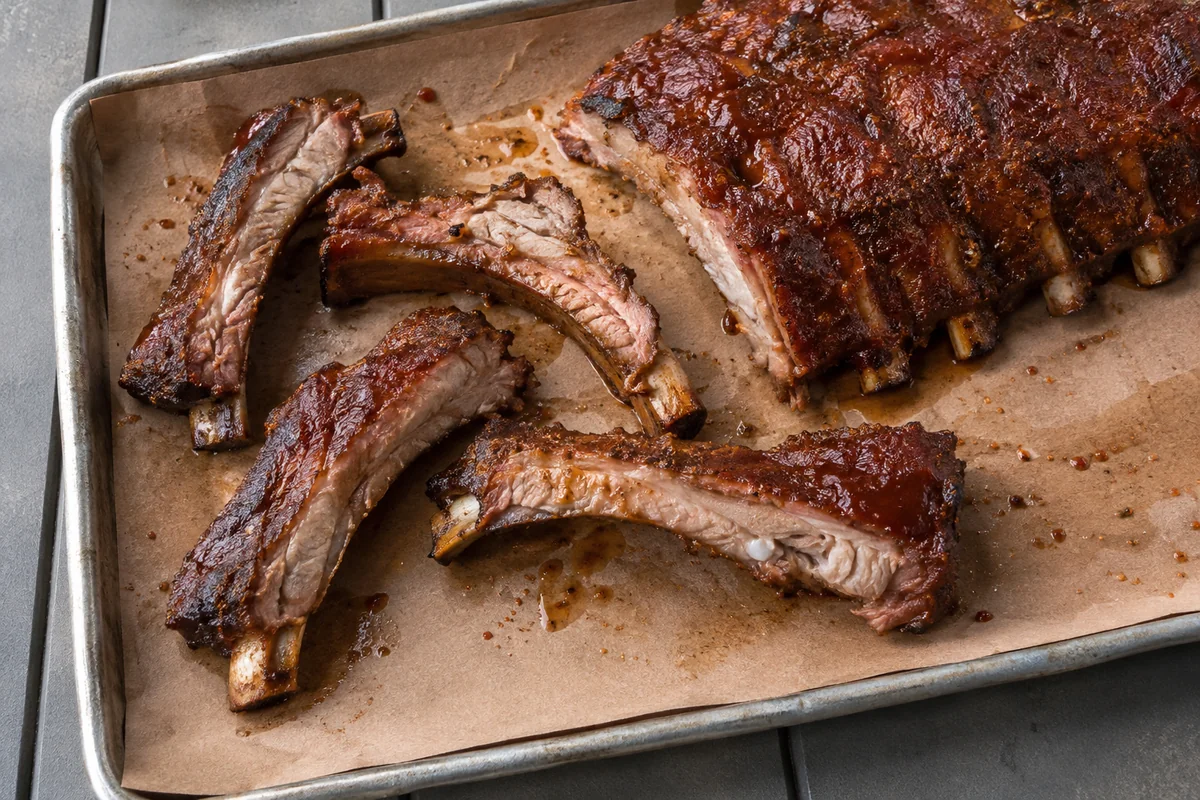
Baby back ribs get a simple paprika rub, a little apple juice in the wrap, and a thin layer of BBQ sauce at the finish. Give them time to turn tender, then cut between the bones and bring the platter to the table.
Cookout Compass cooking score 5 out of 5

- Makes
- 2 racks, about 4 main servings
- Preparation
- About 25 minutes
- Cooking
- About 4 to 6 hours, plus a short rest
Get everything ready
Ingredients
2 racks, about 4 main servings
Shopping list and store linksCopy your list to use at any store
Copy the ingredient list to use while you shop.
This list is for one recipe batch. For several batches or a whole menu, use the meal planner to check your total amounts.
Show list to select by hand
Optional store shortcuts Each opens in a new tab
Your list is not sent to the store. Choose items and quantities on the store website.
These links do not fill a cart. Check local availability, pack sizes and delivery fees at your store.
These grocery store links do not earn us a commission.
What you need
Smoker, food thermometer, smoker thermometer, heavy foil, clean brush, tongs.
Time to cook
Method
Prepare the ribs
Start with fully thawed ribs. Pat them dry, trim loose pieces, and lift away the thin membrane on the bone side with a paper towel for grip. Mix the brown sugar, paprika, salt, pepper, and garlic powder. Spread the mustard lightly over the ribs, then coat both sides with the seasoning.
Smoke until the surface sets
Heat the smoker to 250°F and check the cooking chamber with a thermometer. Put the racks on the grate with the bones underneath and room for air to move around them. Smoke for about 2½ to 3 hours, until the surface looks dry and the seasoning stays in place when touched lightly with tongs.
Wrap and soften
Set each rack on a separate double layer of heavy foil. Divide the apple juice between the two packets and seal them without puncturing the foil. Return to the smoker for about 1 to 2 hours. Open a packet carefully because the steam and juices are hot.
Check the meat and glaze
Insert the thermometer into thick meat between the bones without touching a bone. The pork must reach at least 145°F and rest for at least 3 minutes for safety, but ribs usually need a higher temperature to soften. Begin checking tenderness around 195°F. A probe should slide into the meat easily. If it still feels tight, close the packet and cook longer.
Set the sauce and serve
Once tender, move the ribs onto the grate using clean tools. Brush with BBQ sauce and cook uncovered for about 15 to 25 minutes, watching so the sugar does not burn. Rest for 10 minutes on a clean board, then slice between the bones.
Before you make it
Buy the right ribs
This method is for baby back ribs. Spare ribs are larger and may take longer. Half a rack is a starting main portion with sides, and the amount of meat on a rack varies.
Tenderness takes time
The finishing temperature is a texture guide, not a separate safety rule. Keep checking the feel of the meat instead of forcing every rack to match a fixed number or a six hour schedule.
Serve a bigger group
Use the planner to round up to complete batches of two racks. Keep space between racks and allow more time if a crowded smoker loses heat. Do not multiply the cooking time by the number of batches.
Check the safety guidance
USDA explains safe temperatures in its temperature chart and chamber temperature control in its smoking guide.
Cooking times and serving counts are estimates.
From the cut to the cook
The rack, the rub, and the wrap
Check which rack of ribs you are buying. This recipe uses its own measured rub. The seasoning guide can help you compare bottled blends for a later cook. See the wrapping guide before choosing paper or foil.
The rest of supper
Make it a whole meal.
See the dishes together, check cooking space and build one ingredient list. Each menu shows the extra food from full recipe batches.
Serving and leftovers
Keep cold food at 40°F or below and hot food at 140°F or above. Refrigerate perishable food within 2 hours, or within 1 hour when the temperature is above 90°F. Reheat leftovers to 165°F. Use a food thermometer for meat rather than relying on color.
Cool leftovers promptly in shallow containers. Use or freeze refrigerated leftovers within 3 to 4 days. When a new dish uses previously cooked food, count from the oldest cooked component rather than starting the clock again.
USDA food handling guidance covers cooking temperatures, holding food, and refrigeration.
See USDA leftovers guidance for cooling, storage and reheating.