

Pass the pepperoncini
Mississippi Sloppy Joes
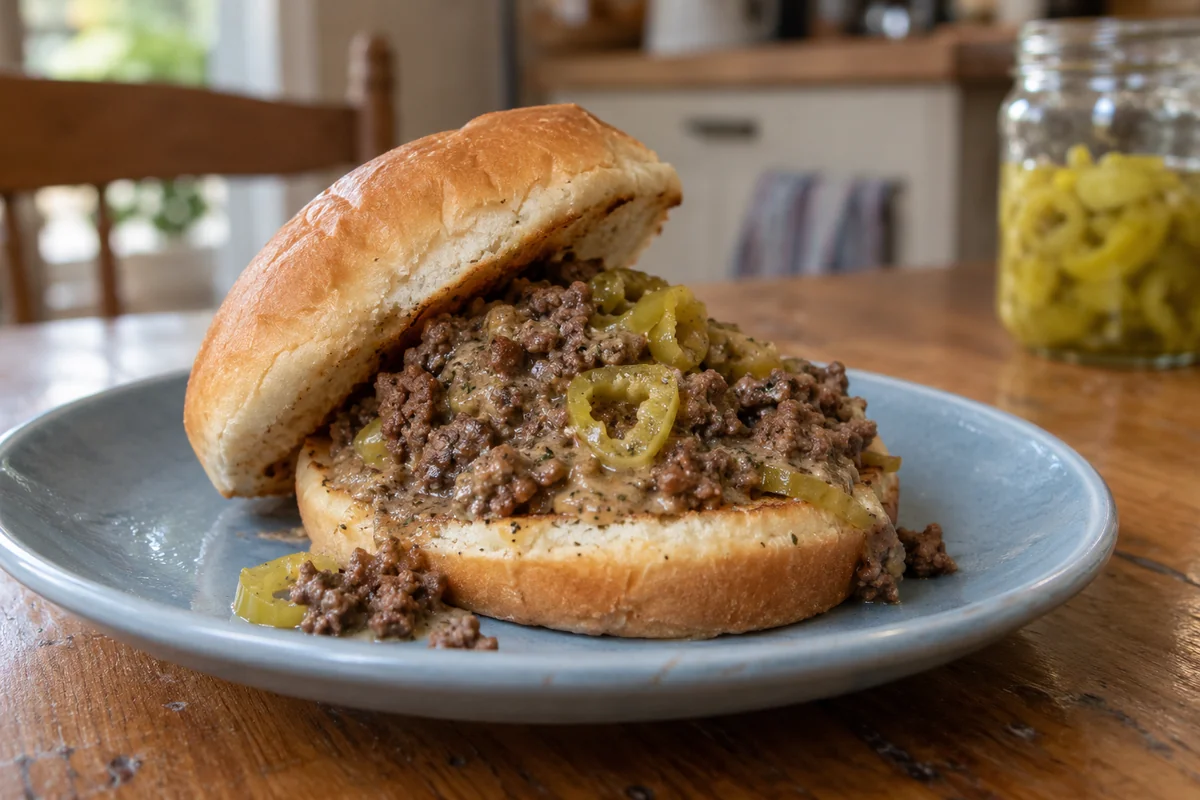
Pepperoncini, butter, ranch seasoning and au jus seasoning give these beef sandwiches their savory filling. A full cup of sliced peppers brings plenty of tang. Spoon the filling onto toasted buns and keep the napkins close.
- Makes
- 6 sandwiches
- Preparation
- About 15 minutes
- Cooking
- About 25 to 30 minutes
Get everything ready
Ingredients
6 sandwiches
Shopping list and store linksCopy your list to use at any store
Copy the ingredient list to use while you shop.
This list is for one recipe batch. For several batches or a whole menu, use the meal planner to check your total amounts.
Show list to select by hand
Optional store shortcuts Each opens in a new tab
Your list is not sent to the store. Choose items and quantities on the store website.
These links do not fill a cart. Check local availability, pack sizes and delivery fees at your store.
These grocery store links do not earn us a commission.
What you need
Oven, 12 inch deep skillet, measuring spoons, spoon, baking sheet and food thermometer.
Time to cook
Method
Cook the beef and onion
Put the ground beef and onion in a 12 inch deep skillet over medium heat. Cook for about 10 to 12 minutes, breaking up the meat and stirring. Check that the ground beef reaches 160°F, then drain the excess fat.
Add the pepperoncini
Stir in the sliced peppers, brine, beef stock, butter, ranch seasoning, au jus seasoning, garlic powder, onion powder and black pepper. Bring to a gentle simmer and cook uncovered for about 8 to 10 minutes, stirring occasionally.
Check the filling
Stir the filling and draw a spoon across the bottom of the skillet. The trail should close slowly, and a spoonful should hold together without draining thin liquid. If needed, simmer uncovered a little longer, stirring so it does not catch. If it becomes dry before the onion softens, add unsalted stock 1 tablespoon at a time. Taste only after the beef is safely cooked.
Toast the buns and serve
Split the buns and toast them cut side up in a 350°F oven for about 3 to 5 minutes. Divide the hot beef filling between the six buns. Serve promptly with napkins close by.
Before you make it
Choose the peppers before you start
Mild and hot pepperoncini can look much the same in the jar. Check the label. The brine and seasoning mixes also bring salt, so this recipe starts without added salt.
Measure the seasoning
Use level measuring spoonfuls of dry mix. Hidden Valley Original Ranch seasoning mix and McCormick au jus gravy mix are recommended starting options. The measured amounts replace whole packets. Other brands can bring different salt and thickening levels. Choose dry mixes, not bottled ranch dressing or prepared gravy.
Keep the filling spoonable
Use unsalted butter and stock because the brine and dry mixes already bring salt. The au jus mix and uncovered simmer help the sauce come together. Stir as it cooks and stop while the beef is still moist. Extra recipe batches need another skillet or separate cooking rounds rather than a deeper pile in this pan.
Check the meat
Ground beef needs 160°F. Confirm it with a thermometer before serving, following the USDA temperature chart.
Cooking times and serving counts are estimates for one batch. The planner rounds up to complete batches. Extra batches need separate cooking space, and the full meal may take longer.
Choose your next cook
For a tomato sauce version, make Classic Sloppy Joes. Find more comfort food meals.
Inspired by Salt & Lavender's Mississippi sloppy joes, with adjusted butter and pepper amounts.
Serving and leftovers
Keep cold food at 40°F or below and hot food at 140°F or above. Refrigerate perishable food within 2 hours, or within 1 hour when the temperature is above 90°F. Reheat leftovers to 165°F. Use a food thermometer for meat rather than relying on color.
Cool leftovers promptly in shallow containers. Use or freeze refrigerated leftovers within 3 to 4 days. When a new dish uses previously cooked food, count from the oldest cooked component rather than starting the clock again.
USDA food handling guidance covers cooking temperatures, holding food, and refrigeration.
See USDA leftovers guidance for cooling, storage and reheating.