

Give the oven the long job
Braised Lamb Shanks with Tomato and Thyme
Shanks need more than a browned surface. A covered pot with tomato, stock and vegetables gives them the long gentle cook that turns firm meat into a supper you can eat with a fork.
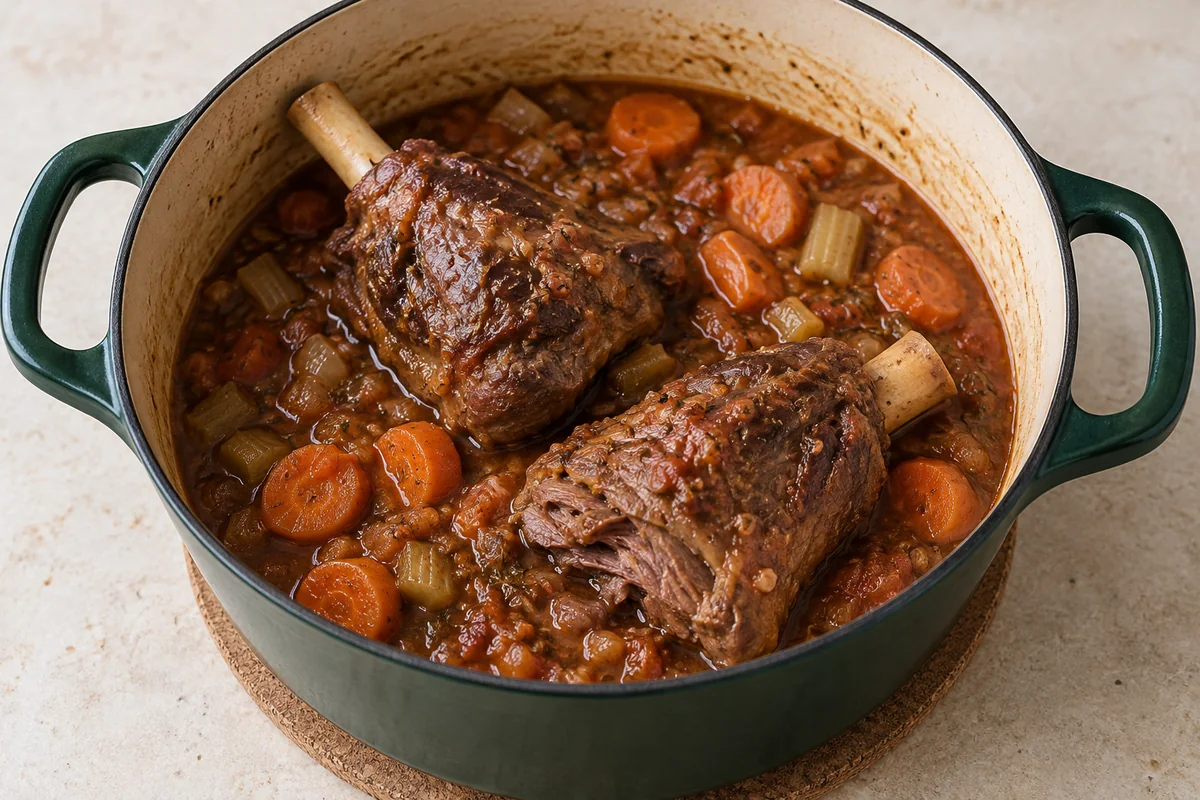
- Makes
- 2 generous main portions, 1 shank each
- Preparation
- About 20 minutes
- Cooking or chilling
- About 3 to 4¼ hours
Get everything ready
Ingredients
2 generous main portions, 1 shank each
What you need
Oven, heavy covered oven safe pot about 4 quarts with room for both shanks in one layer, tongs, ladle, heat gloves and a food thermometer.
Time to cook
Method
Brown without crowding
Heat the oven to 325°F. Pat the shanks dry and season with the salt and pepper. Heat the oil in the heavy pot over medium high heat. Brown the shanks on several sides for about 8 to 12 minutes total, then transfer to a plate. Work separately if the pot does not let both brown.
Build the cooking liquid
Reduce to medium heat. Add onion, carrot and celery and cook about 6 to 8 minutes, stirring. Add garlic and tomato paste and stir for 1 minute. Pour in crushed tomatoes and stock, scraping the browned bits from the pot. Stir in thyme and the bay leaf.
Cover and begin the braise
Return both shanks and their juices to the pot in one layer. Add the measured water and enough additional hot water to bring the liquid about halfway up the meat. Bring to a simmer, cover with the oven safe lid and put in the oven. Start the braise immediately after browning rather than storing partly cooked lamb.
Wait for tenderness
Braise about 2½ to 3½ hours, turning the shanks carefully after about 75 minutes. Open the lid away from your face. Add a little hot water if the liquid becomes low. Start checking after 2 hours. Each shank must reach at least 145°F, but keep cooking until a fork turns easily in the thick meat and it loosens from the bone. That tenderness check is separate from the safety minimum.
Finish the sauce
Transfer the tender shanks to a clean dish and let them rest at least 3 minutes. Remove the bay leaf. Skim excess fat from the pot. If the sauce is thin, simmer uncovered on the stove about 5 to 10 minutes until it lightly coats a spoon. Spoon the vegetables and sauce over the shanks and serve.
Before you make it
Choose pieces that fit the pot
Fore shanks and hind shanks can both work when they are close to the specified size. Their shape and meatiness differ. Ask the butcher for two comparable pieces and check that they fit in one layer before cooking.
Tender takes longer than safe
The lamb safety endpoint is not a promise that a shank will be soft at that temperature. Keep the covered braise gentle and use the fork check. A larger shank can need more time.
Cool in smaller portions
Do not leave the full hot pot on the counter to cool for hours. Divide the meat and sauce into shallow containers and refrigerate promptly at 40°F or below. Use within 3 to 4 days or freeze. Reheat the meat and sauce to 165°F.
Temperature comes first
USDA gives lamb steaks, chops and roasts a minimum internal temperature of 145°F before removal from heat, followed by at least 3 minutes of rest. See the USDA food safety guidance.
Keep cooked lamb safely
Refrigerate leftovers promptly in shallow containers at 40°F or below, within 2 hours or within 1 hour above 90°F. Use cooked lamb within 3 to 4 days or freeze it. Reheat leftovers to 165°F. Read the USDA lamb handling and storage guidance.
Cooking times and serving counts are estimates. The planner rounds up to complete batches. When you multiply a batch, use additional pans or cook in stages rather than crowding the food.
Choose the setup
Start with the lamb cut guide for shank choices and the cookware guide for a covered pot. Follow the pot maker’s heat limits for its lid and handles.
Serving and leftovers
Keep cold food at 40°F or below and hot food at 140°F or above. Refrigerate perishable food within 2 hours, or within 1 hour when the temperature is above 90°F. Reheat leftovers to 165°F. Use a food thermometer for meat rather than relying on color.
Cool leftovers promptly in shallow containers. Use or freeze refrigerated leftovers within 3 to 4 days. When a new dish uses previously cooked food, count from the oldest cooked component rather than starting the clock again.
USDA food handling guidance covers cooking temperatures, holding food, and refrigeration.
See USDA leftovers guidance for cooling, storage and reheating.