

A warm fall side
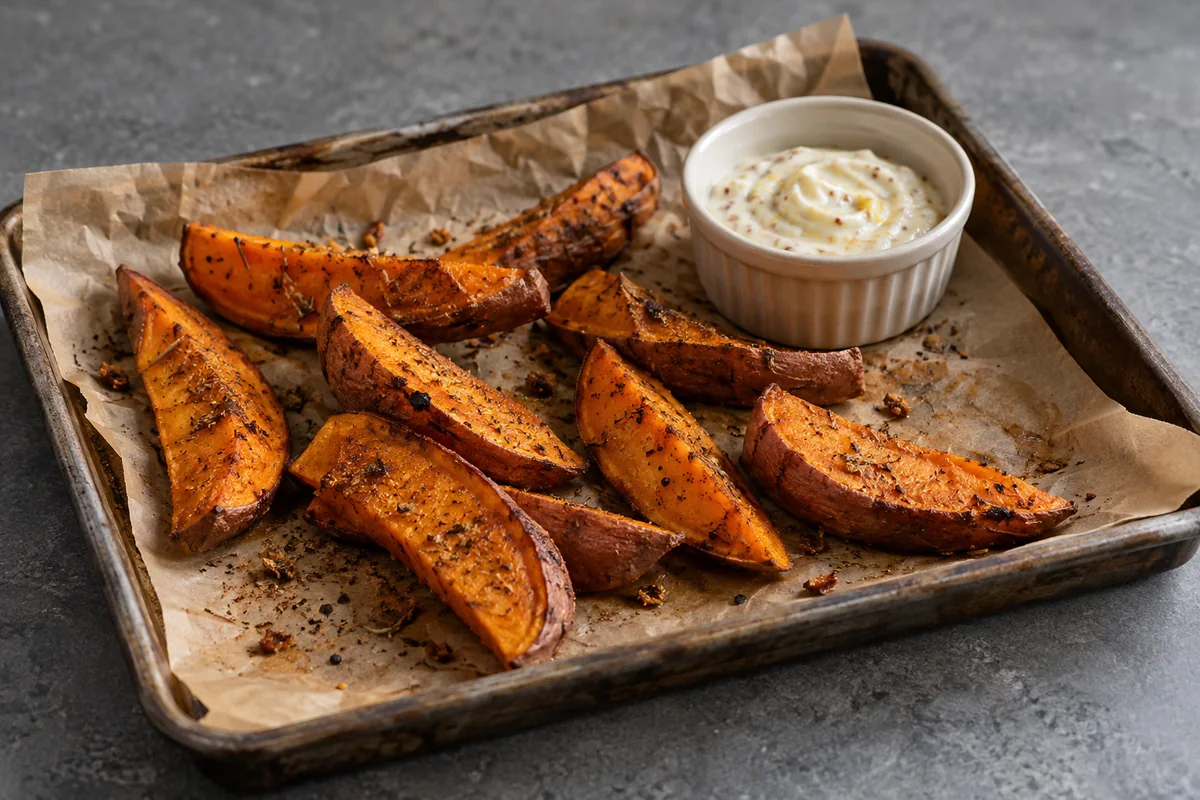
Savory Sweet Potato Wedges with Mustard Yogurt
Rosemary and black pepper keep these wedges savory. Roast them on a metal tray and put the cool mustard yogurt on the table so the edges stay dry and browned.
- Makes
- 2 side portions from 12 ounces sweet potato
- Preparation
- About 10 minutes
- Cooking or chilling
- About 25 to 35 minutes
Get everything ready
Ingredients
2 side portions from 12 ounces sweet potato
What you need
Oven, rimmed metal baking tray, spatula and small bowl.
Time to cook
Method
Cut consistent wedges
Heat the oven to 425°F. Cut the sweet potato into wedges about ½ inch thick at the widest edge. Leave the scrubbed skin on or peel it before cutting.
Coat and spread
Toss with the oil, rosemary, salt and pepper. Spread on a metal tray in one layer with a flat side against the pan.
Roast until tender
Roast about 25 to 35 minutes, turning after 15 minutes. The centers should be soft and the flat surfaces browned. Remove thinner pieces early if needed.
Mix the cool dip
While the wedges roast, stir together the yogurt, mustard and lemon juice. Refrigerate until serving. Divide the wedges into two portions and offer the dip separately.
Before you make it
Use the oven for predictable heat
This recipe uses a 425°F oven. A low smoker running for tenderloin will not brown the wedges on the same schedule.
Do not stack extra batches
Use another tray for more wedges. Piled wedges soften without the same browned surfaces.
Cooking times and serving counts are estimates. The planner rounds up to complete batches. When you multiply a batch, use additional pans or cook in stages rather than crowding the food.
Choose the setup
See metal tray and pan guidance. The autumn supper menu keeps the oven side separate from the smoker main.
Serving and leftovers
Keep cold food at 40°F or below and hot food at 140°F or above. Refrigerate perishable food within 2 hours, or within 1 hour when the temperature is above 90°F. Reheat leftovers to 165°F. Use a food thermometer for meat rather than relying on color.
Cool leftovers promptly in shallow containers. Use or freeze refrigerated leftovers within 3 to 4 days. When a new dish uses previously cooked food, count from the oldest cooked component rather than starting the clock again.
USDA food handling guidance covers cooking temperatures, holding food, and refrigeration.
See USDA leftovers guidance for cooling, storage and reheating.