

A roast for the smoker
Smoked Boneless Leg of Lamb
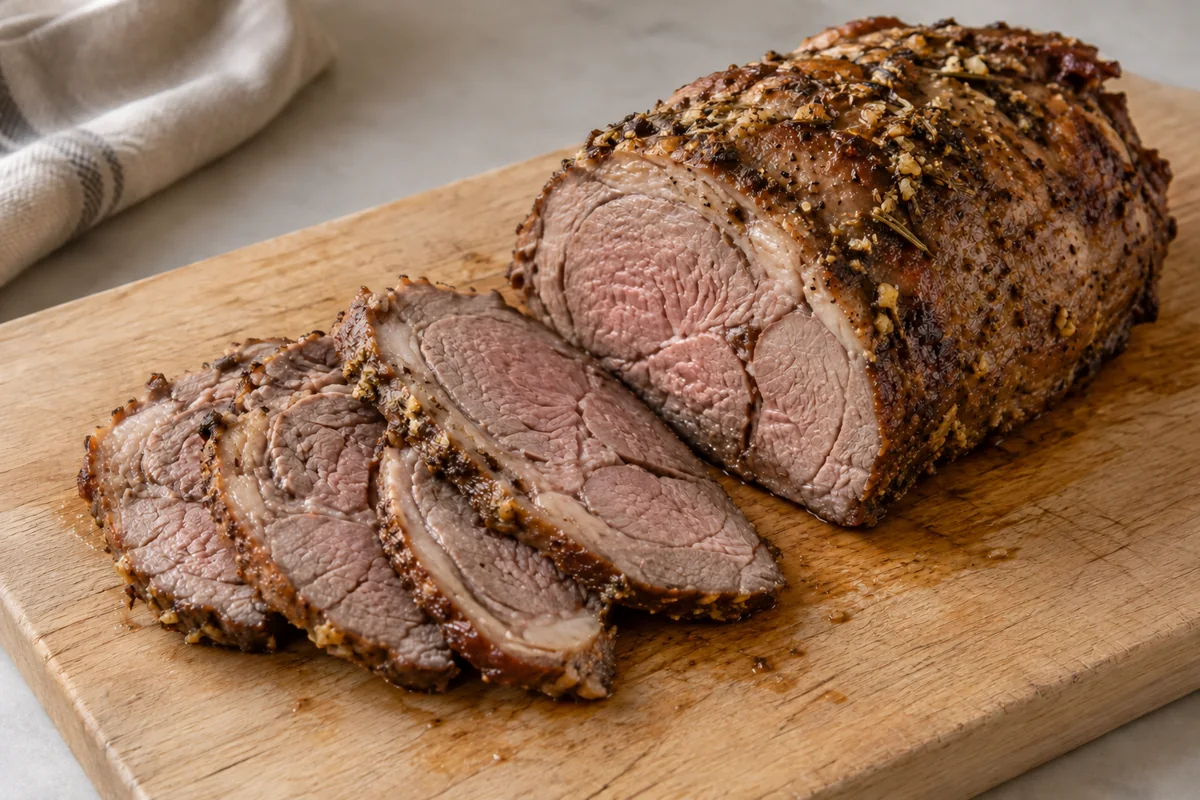
A rolled boneless leg makes a sliceable roast rather than a pan of pulled meat. Mustard holds the rosemary and garlic on the surface, and a steady smoker does the cooking without an extra searing stage.
- Makes
- 6 main portions from a 3 pound boneless leg
- Preparation
- About 20 minutes
- Cooking or chilling
- About 2 to 3½ hours, plus 15 minutes resting
Get everything ready
Ingredients
6 main portions from a 3 pound boneless leg
What you need
Smoker, cooking chamber thermometer, food thermometer, butcher twine if needed, rimmed drip pan set up according to the smoker instructions, tongs and a clean carving board.
Time to cook
Method
Set up a steady smoke
Heat the smoker to 275°F and check the temperature at the cooking area. Arrange the drip pan according to the appliance instructions without blocking the intended airflow. Use only fuel intended for that smoker.
Shape and season the roast
Remove packaging and any netting that is not suitable for cooking. Trim loose membrane and thick hard surface fat, leaving a thin fat layer. If the leg is open, fold it into an even compact roast and tie at intervals with butcher twine. Mix mustard, oil, garlic, rosemary, lemon zest, salt and pepper. Spread over the outside.
Cook by the center reading
Place the roast in the smoker with space around it. Smoke at 275°F, starting to check its center after about 90 minutes. Allow roughly 2 to 3½ hours for a 3 pound roast. Its thickness, starting temperature and the smoker matter more than an exact minutes per pound rule.
Reach the endpoint before removing
Check several thick areas, avoiding large fat pockets and the space within a fold. Keep cooking until the coolest checked area reaches at least 145°F before the roast leaves the heat. The surface can be brown while the center still needs time.
Rest and carve
Move to a clean board and rest 15 minutes. This includes the required minimum 3 minute rest. Remove all twine. Separate natural muscle sections if needed and slice across the grain. Divide into six main portions with sides.
Before you make it
Boneless and rolled is the recipe
Use a 3 pound boneless leg formed into a roast. An open butterflied leg cooks much faster, while a large leg with the bone needs another schedule. This recipe does not include stuffing.
Slice it rather than chasing pulled meat
The endpoint here makes a carved leg roast. Do not keep cooking it toward a pulled shoulder texture just because a different lamb recipe uses a much higher target.
Keep surplus useful
Carve leftovers into smaller portions and refrigerate promptly in shallow containers at 40°F or below. Use cooked lamb within 3 to 4 days or freeze it. Reheat leftovers to 165°F. See the USDA lamb storage guidance linked below.
Temperature comes first
USDA gives lamb steaks, chops and roasts a minimum internal temperature of 145°F before removal from heat, followed by at least 3 minutes of rest. See the USDA food safety guidance.
Keep cooked lamb safely
Refrigerate leftovers promptly in shallow containers at 40°F or below, within 2 hours or within 1 hour above 90°F. Use cooked lamb within 3 to 4 days or freeze it. Reheat leftovers to 165°F. Read the USDA lamb handling and storage guidance.
Cooking times and serving counts are estimates. The planner rounds up to complete batches. When you multiply a batch, use additional pans or cook in stages rather than crowding the food.
Choose the setup
The lamb cut guide explains leg and shoulder choices. Our smoker owner notes and thermometer and carving accessories help with the setup.
Serving and leftovers
Keep cold food at 40°F or below and hot food at 140°F or above. Refrigerate perishable food within 2 hours, or within 1 hour when the temperature is above 90°F. Reheat leftovers to 165°F. Use a food thermometer for meat rather than relying on color.
Cool leftovers promptly in shallow containers. Use or freeze refrigerated leftovers within 3 to 4 days. When a new dish uses previously cooked food, count from the oldest cooked component rather than starting the clock again.
USDA food handling guidance covers cooking temperatures, holding food, and refrigeration.
See USDA leftovers guidance for cooling, storage and reheating.