

A steak board for two
Flat Iron Steak with Blistered Tomato Dressing
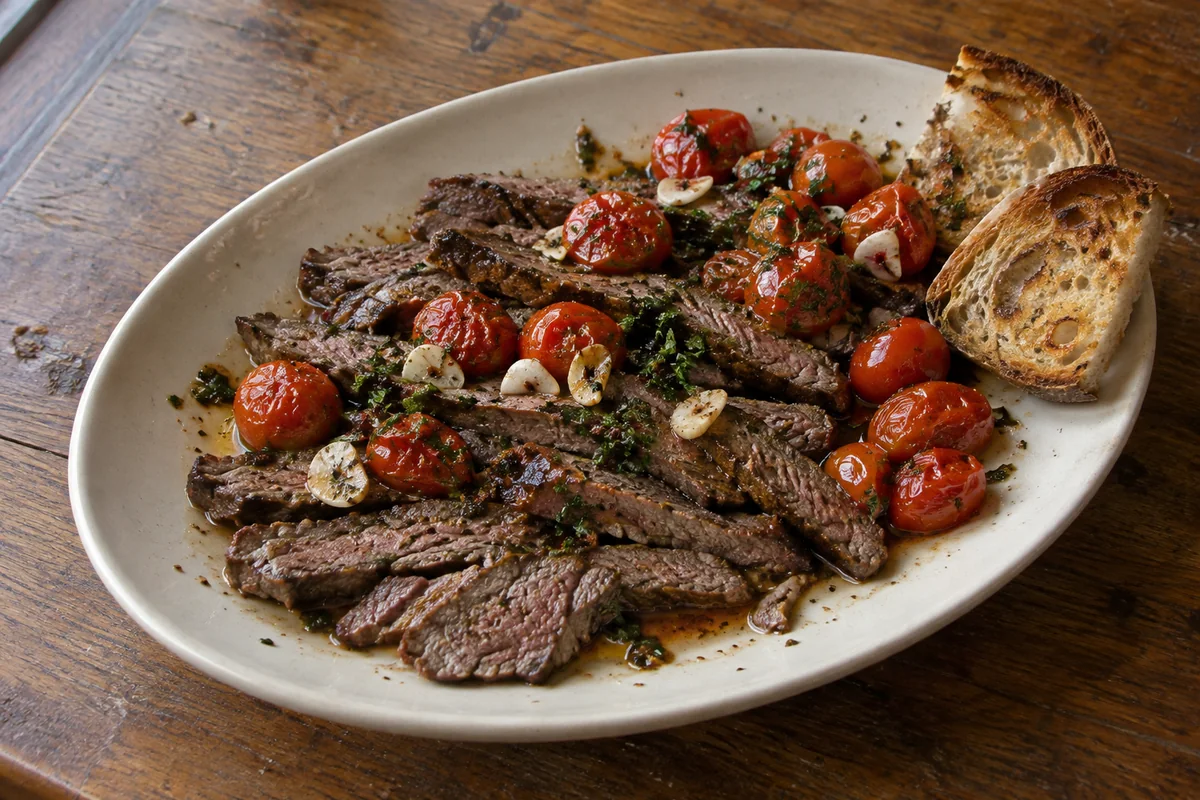
Blister cherry tomatoes in a small skillet and spoon their juices over sliced flat iron. Toasted bread catches the tomato and parsley dressing without needing a second sauce.
- Makes
- 2 main portions from 12 ounces raw flat iron
- Preparation
- About 10 minutes
- Cooking or chilling
- About 12 to 20 minutes, plus at least 3 minutes resting
Get everything ready
Ingredients
2 main portions from 12 ounces raw flat iron
What you need
Grill, small heavy skillet, tongs, clean board and food thermometer.
Time to cook
Method
Find the grain
Heat the grill to about 400°F with a cooler area. Before seasoning, notice which way the long muscle fibers run. Pat the steak dry, rub with 1 teaspoon oil and add the salt and pepper.
Make the warm dressing
Heat 1 teaspoon oil in a small skillet over medium high heat. Add the tomatoes and cook 4 to 6 minutes, stirring occasionally, until blistered and starting to split. Add the garlic for the last minute. Remove from heat and stir in the vinegar and parsley.
Grill the steak
Grill about 5 to 8 minutes per side, moving to the cooler area if the surface darkens quickly. Check from the side into the center for at least 145°F before removing from heat.
Toast and slice
Rest the steak on a clean board for at least 3 minutes. Brush the bread with the remaining 1 teaspoon oil and toast briefly on the grate. Slice the steak thinly across the grain. Divide steak, bread and tomato dressing between two plates.
Before you make it
Buy the right cut
Choose a trimmed flat iron rather than an untrimmed top blade steak with a seam of connective tissue. Ask the butcher when the package name is unclear.
Keep the board clean
A serving board must be separate from the surface used for raw steak. Add the tomato juices only after the steak rests.
Temperature comes first
USDA gives beef and pork steaks, chops and roasts a minimum of 145°F before removal from heat, followed by at least 3 minutes of rest. See the USDA food safety guidance.
Cooking times and serving counts are estimates. The planner rounds up to complete batches. When you multiply a batch, use additional pans or cook in stages rather than crowding the food.
Choose the setup
Flat iron comes from the chuck area. See small skillet guidance.
Serving and leftovers
Keep cold food at 40°F or below and hot food at 140°F or above. Refrigerate perishable food within 2 hours, or within 1 hour when the temperature is above 90°F. Reheat leftovers to 165°F. Use a food thermometer for meat rather than relying on color.
Cool leftovers promptly in shallow containers. Use or freeze refrigerated leftovers within 3 to 4 days. When a new dish uses previously cooked food, count from the oldest cooked component rather than starting the clock again.
USDA food handling guidance covers cooking temperatures, holding food, and refrigeration.
See USDA leftovers guidance for cooling, storage and reheating.